
Providing feedback is crucial for everyone’s improvement. And this is a fact that everyone knows.
The essential thing is how to collect it.
The bigger the company, the harder it is to collect feedback. The same goes for workshops or training.
Before I knew one of the most popular tools from Management 3.0, Happiness Door, I was collecting feedback on my training at the end of the day. For a two-day training, it’s OK because you can do something about feedback tomorrow. However, the action is based on feedback for a one-day training, and we can do it for the next training. But the group is different.
But, with Happiness Door, everything is easy.
Let me share one example of how you can use this tool.
I ran a workshop with more than fifteen attendees. I put flipchart paper on the exit door and said, “Anyone who wants to leave the room needs to put a sticky note on their way out.” I split the paper into two parts: the bottom was sad and needed improvement, and the top was reserved for me because I was excited and enjoying the workshop. Please put on the sticky notes why you feel like that.
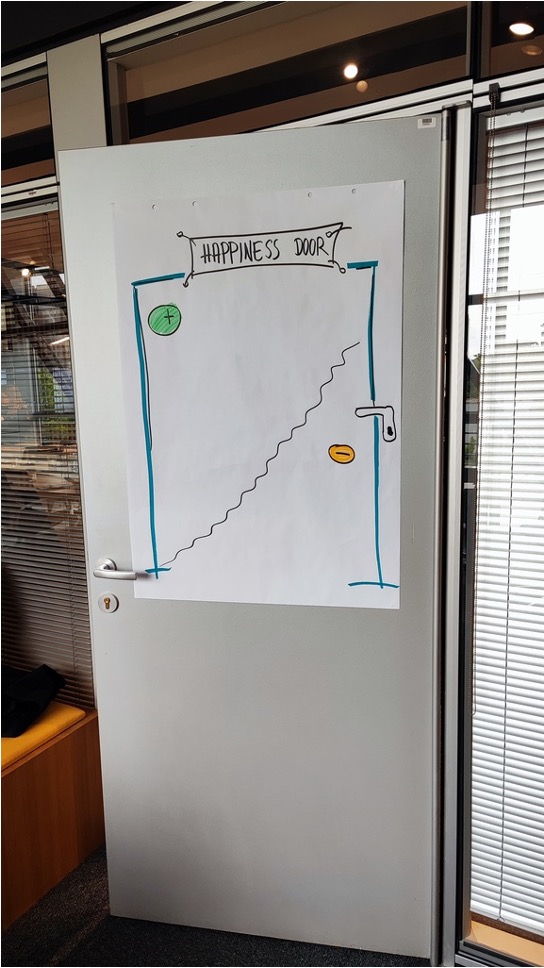
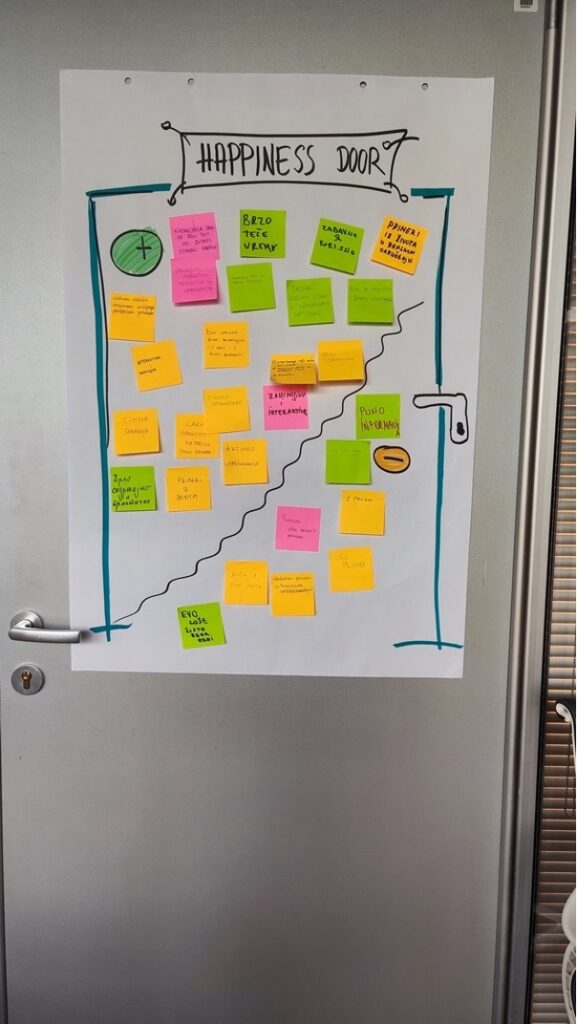
This process is good because, at every short break (we had a few), people would put sticky notes, and after the second break, we already had a lot of feedback. So, during the breaks, I was able to read them and take some immediate action. Someone who put sticky notes and I took some action about it was very happy. They felt heard and respected. “Finally, someone took my opinion into consideration.”
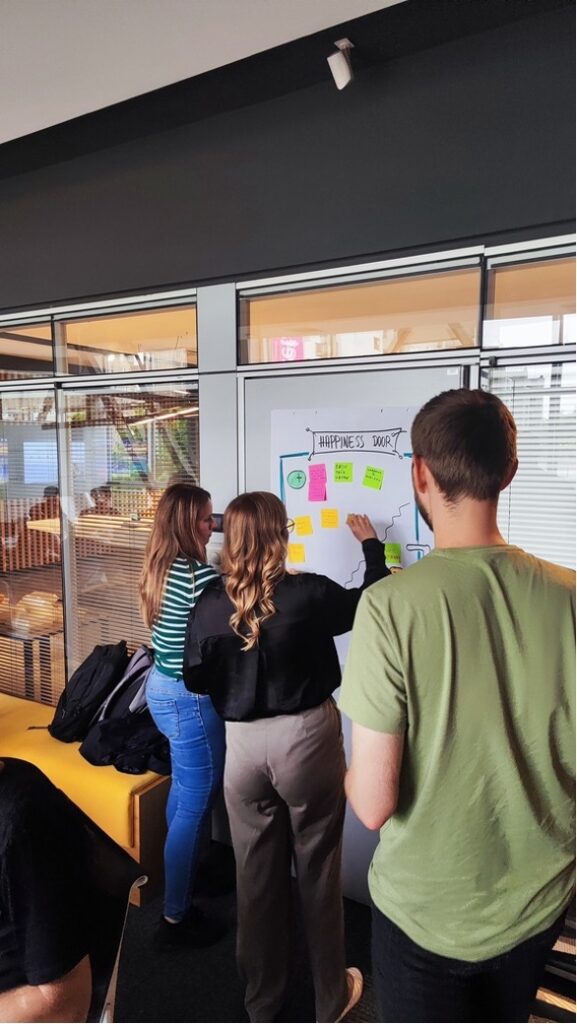
The group could see immediate improvement in the workshop.
From turning on the heating to “I would like to discuss some topics|, the workshop became a pleasant place to spend time and enjoy group work.
What did I learn?
The power of feedback is enormous, but the speed of their collection is priceless!
The Mng 3.0 tool Happiness Door is a fantastic way to collect feedback from the attendees during the workshop, giving me enough time to improve my workshop in real-time.
For this meeting, I drew a flipchart for the Happiness door during the workshop, so I needed some time to explain. Next time, I will prepare the Happiness door flipchart before a workshop, and that will be part of my intro Kanban board presentation.
What are some possible pitfalls in using this tool, and how did I handle them?
The Happiness door could sometimes prevent them from leaving the workshop even if they must because they will feel obliged to write something on the sticker and put it on the wall. That is why I disagree with this. I am using humor and saying, “Don’t leave the room if you don’t have to say anything about this workshop. Feel free to put it on the door only if you have something to share. But, please, reflect on this before you leave the door.
If a room has two doors, people will sometimes leave the room using the second door. So, you can put another flipchart on the second door or leave this as an opportunity for people to choose if they want something to share. I always use only one door for a happiness door.
And for the end, I would like to share with you some tips and tricks to run this exercise smoothly:
– Prepare your flipchart for the Happyness door before the workshop
Invest some time in drawing and beautifying this flipchart paper. Using icons, colors, and exciting fonts can encourage people to write more stickers.
– Don’t insist on stickers in any situation; people will notice that and maybe react differently than you want
– Always put flipchart paper on the door, not on the wall, because of the name, Happiness Door, so attendees could easily connect to this exercise
